
// POD 02 · AI-native industrial decarbonization
Decarb Industry
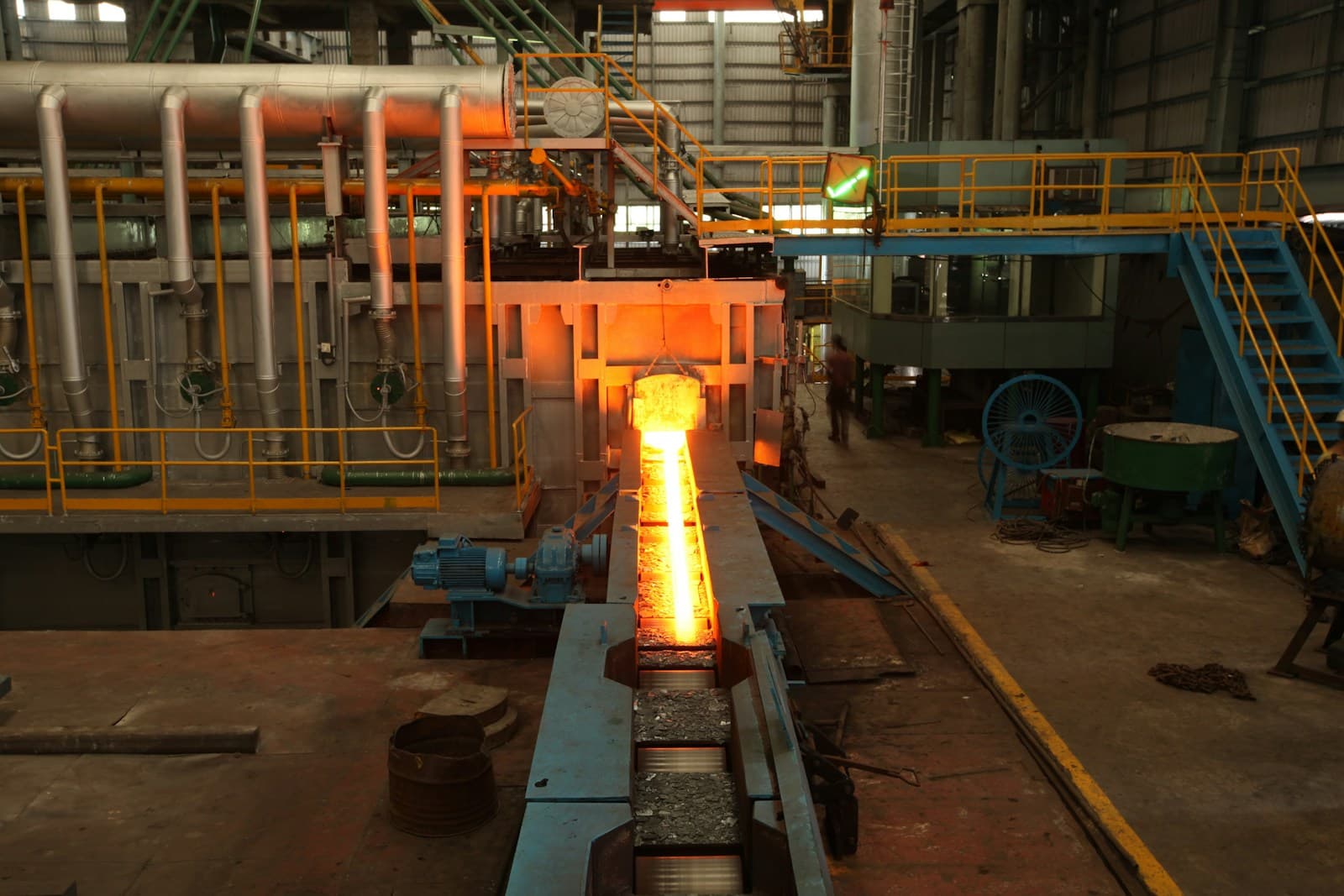
Heavy industry emits 9-12 gigatonnes of CO2 a year. The largest near-term cuts do not come from a single miracle technology; they come from process efficiency, smarter materials, and assets that last longer.
Industrial CO2 / year
Cement, steel, chemicals, logistics
Process-efficiency upside
Most assets run far below optimum
Annual industrial OPEX
Where the lever actually lives
02 // Why now
What keeps showing up in the field.
Decarb Industry is not a theme we would chase because the category sounds large. It is a place where the pressure is already visible: 9-12 Gt tied to industrial co2 / year, with decisions still moving through legacy workflows, fragmented tools, and operator judgment.
The timing matters because the buyer is no longer asking whether the problem exists. They are asking which layer can turn operational data into repeatable decisions before cost, reliability, compliance, or sovereignty become the constraint.
A multi-trillion, non-discretionary transition.
Most emissions come from low-tech process waste.
The Global South will drive future emissions growth.
Corrosion and degradation quietly amplify emissions.
03 // Calls for curiosity
Problems worth solving in Qatar and the GCC.
We start with field curiosity rather than a company idea. The question is not "what can we build?" but "where does the same expensive failure keep appearing across operators?" In this POD, the strongest wedges show up around industrial logistics decarb and low-carbon materials.
Each wedge has to be narrow enough for a first pilot, but important enough that a regional proof can travel. Qatar and the GCC are useful proving grounds because the assets are concentrated, the stakes are high, and the reference customer can be globally legible.
// Industrial Logistics Decarb
Abatement per tonne without waiting for new hardware
Before replacing turbines, routing and load-shifting can cut megatons on assets already paid for.
Global venture angle
Efficiency-led decarb in the LNG export cluster sets a global benchmark.
// Low-Carbon Materials
Clinker chemistry and yield at regional scale
Cement demand is rising across the Gulf while process inefficiency wastes the emissions budget.
Global venture angle
A few points of yield in GCC cement can become a licensable category.
// Asset Longevity
Asset life extension as the cheapest tonne avoided
Replacing steel and concrete is slow; extending life with inspection intelligence is fast.
Global venture angle
Models trained in the Gulf export to coastal industrial belts everywhere.
04 // The clusters
Where we would place a company.
The clusters below are where we would place early company formation work. Industrial Logistics Decarb gives us the most immediate operating wedge; Low-Carbon Materials shows where the same intelligence layer can expand; Asset Longevity keeps the thesis honest by tying it to measured signals rather than narrative heat.
A good POD company should not need every cluster to be right. It should start with one painful workflow, earn the right to read more data, then expand into the adjacent decisions that the customer already makes every week.
Cluster 01 · Thesis-shaped
Industrial Logistics Decarb
Cross-border logistics, routing, and modal optimization as the fastest tonne abated per dollar.
Cluster 02 · Early signal
Low-Carbon Materials
Cement, steel, and alternative materials where a small percentage win is hundreds of megatons.
Cluster 03 · Thesis-shaped
Asset Longevity
Corrosion, durability, and agentic manufacturing that make existing assets last longer.
05 // The diagram
Three levers weighted by addressable CO2
Industrial logistics, low-carbon materials, and asset longevity each move a different chunk of industrial emissions. The intelligence layer sits across all three.
The stack only becomes interesting when the feedback loop closes. Data from the field changes the recommendation, the recommendation changes the operating decision, and the outcome becomes a better proprietary dataset for the next deployment.
06 // Investment thesis
Why we would underwrite this POD.
We underwrite this POD when the spend is non-discretionary, the workflow is close to the asset, and the output can be measured in avoided cost, lower risk, faster throughput, or new capacity.
That is why 30%+ matters as much as the headline market number. The best venture here does not sell a dashboard. It becomes the operating layer that a serious buyer does not want to remove once it has learned the system.
01
Non-discretionary, fast-ROI budgets.
02
Defensible intelligence layers from telemetry, physics, and workflow lock-in.
03
Clear exit pull from OEMs, logistics majors, climate infra funds, and industrial software leaders.
07 // Optimal fellow profile
DC · 02
The Process Optimizer
The fellow profile is intentionally specific. We are looking for someone who has lived with the constraints long enough to know which problem is real, which metric matters, and which customer promise will survive contact with procurement.
That person does not need to arrive with a polished startup idea. They need the scar tissue to know where a first wedge can earn trust.
15+ years domain experience
“Every ton of CO2 is a process failure waiting to be solved with data.”
08 // Technical deep dives
Follow the technical routes inside this POD.
Move from the market thesis into the operating constraints, system patterns, and technical questions that make this POD investable.
Industrial AI · Venture Building
Consultancy-to-Platform Transition
The most common failure mode for deep tech startups: valuable work delivered through services instead of software.
Industrial AI · Full Stack Architecture
The Physics-to-Software Pipeline
The full stack for industrial AI runs from physical sensor to human decision. Each transition is where companies live or die.
Decarb Industry · Bio-Derived Materials · Green Chemistry
Natural Antimicrobials & Sustainable Materials
Bio-derived actives, functional packaging, and the regulatory gauntlet that decides who scales.
09 // Build with us
Three ways to build inside this POD.
The way into this POD depends on what you bring. Fellows bring operator knowledge, partners bring the live system, and the portfolio shows how conviction compounds before the company is obvious from the outside.
If the problem maps to the thesis, we would rather begin with a precise pilot than a broad brainstorm. The goal is to turn a field signal into a venture-ready wedge with evidence attached.
For Fellows
Fellows bring scar tissue. Partners bring live context, infrastructure, and access. The portfolio shows what that work becomes.
For Partners
Fellows bring scar tissue. Partners bring live context, infrastructure, and access. The portfolio shows what that work becomes.
For Venture Readers
Fellows bring scar tissue. Partners bring live context, infrastructure, and access. The portfolio shows what that work becomes.
10 // Closing vision
Why Decarb Industry compounds.
GCC and Southeast Asia are building industrial capacity faster under mandates that bite earlier in the growth cycle.
The portfolio we want is blunt: cleaner logistics, lower-carbon materials, longer-lived assets.
Next POD · Capital Infrastructure →